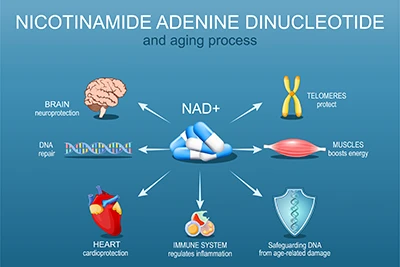
NAD+ (nicotinamide adenine dinucleotide) is a critical molecule found in every cell of the body. It plays an essential role in energy production, mitochondrial function, and DNA repair. As people age, NAD+ levels naturally decline, which may contribute to fatigue, metabolic dysfunction, and reduced cellular repair.
Because of this decline, NAD+ restoration has become a major focus in preventive and longevity medicine. Scientists believe that maintaining healthy NAD+ levels may support cellular resilience and metabolic health as we age.
The body produces NAD+ through several biochemical pathways, but aging, stress, and illness can reduce its availability. To address this decline, researchers and clinicians have explored supplementation with NAD+ precursors, which help the body generate more NAD+. Two of the most widely studied compounds are nicotinamide riboside (NR) and nicotinamide mononucleotide (NMN).
These compounds serve as building blocks that cells can convert into NAD+. Early research suggests they may support mitochondrial health, improve metabolic efficiency, and enhance cellular repair processes. Some studies have also examined intravenous NAD+ therapy, which is used in certain clinical settings to temporarily increase circulating NAD+ levels.
While research is ongoing, the interest in NAD+ stems from its connection to sirtuins, a family of proteins involved in cellular longevity and stress resistance. Sirtuins rely on NAD+ to function, meaning declining NAD+ levels may impair important cellular maintenance processes.
Maintaining healthy NAD+ levels is now considered part of a broader strategy focused on mitochondrial health and metabolic optimization, both of which play central roles in healthy aging.
